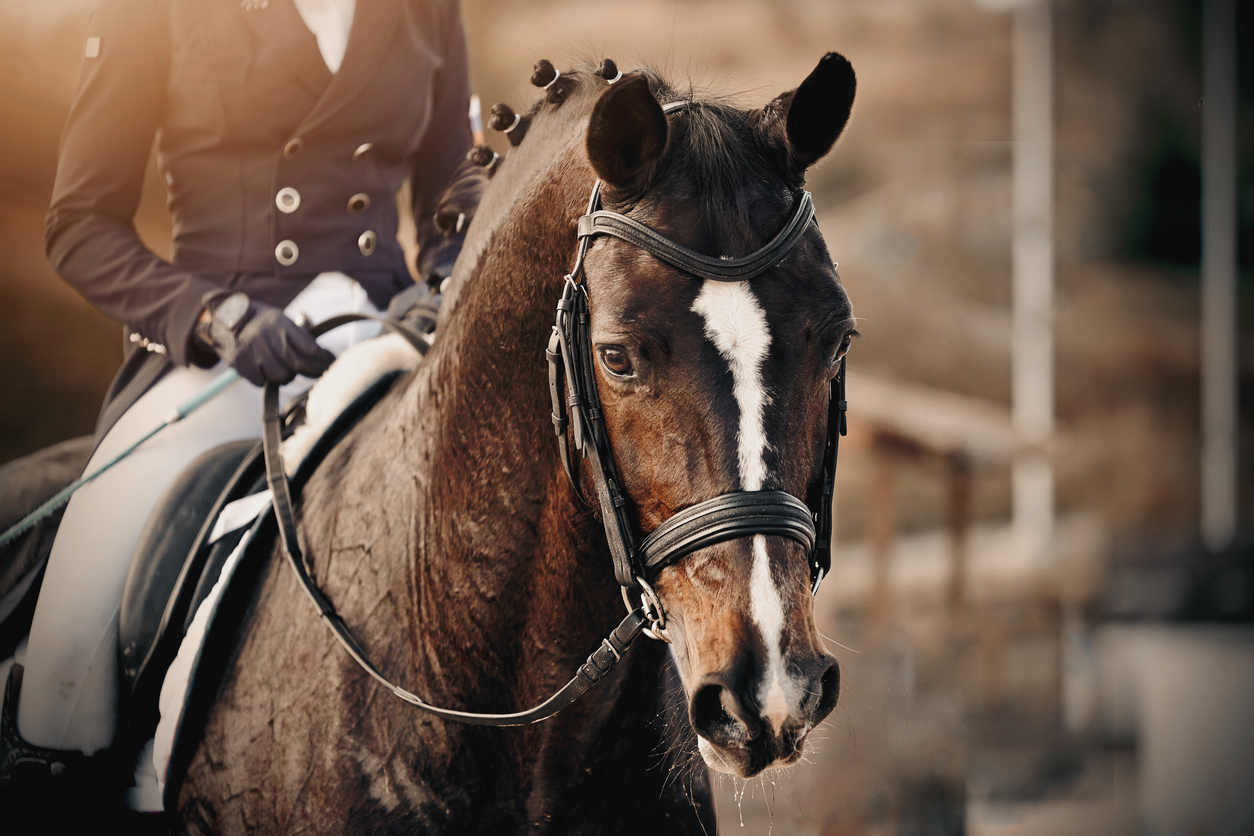
Los Angeles has long been horse country, even if that identity is often overshadowed by the city's association with film, professional sports, beaches, and urban growth. From the ranchos of the Spanish and Mexican periods to the formal dressage rings of Burbank, Arcadia, and the wider Southern California horse community, the region has developed a lasting relationship with skilled horsemanship.
The history of dressage in Los Angeles is not a straight line from the rancho to the modern competition arena. Instead, it is the story of several traditions meeting over time: Californio stock-horse culture, English riding and horse-show traditions, European classical training methods, and a local network of riders, trainers, volunteers, facilities, and organizations that made dressage a sustained sport in Southern California.
Rancho Roots and the Culture of Horsemanship
Long before Los Angeles became a vast metropolitan region, horses were central to life on the ranchos of Southern California. During the Spanish, Mexican, and early American periods, horses were essential for transportation, ranch work, cattle management, and social life. Californio vaqueros developed highly refined practical riding skills, relying on balance, lightness, responsiveness, and close communication between horse and rider.
Those working traditions should not be confused with modern competitive dressage, which developed through European military and classical riding schools before becoming an international sport. Still, there is an important connection in philosophy. Both traditions value an attentive, balanced horse that responds to subtle, effective aids rather than force.
As the Los Angeles Basin urbanized, many of the region's large ranching landscapes disappeared. Yet horse culture survived in communities with trails, private stables, riding academies, and equestrian-zoned properties. The result was a rare urban-region equestrian identity: a major global city that continued to maintain pockets of working, recreational, and competitive horse life.
For readers interested in the land-use side of that legacy, see our complete guide to Burbank Rancho zoning laws and rules for keeping horses legally, and for more on how ranch culture shaped the region's riding traditions, read our history of polo in Los Angeles, from ranch culture to Hollywood's golden age.
From Horse Culture to Organized Dressage
Modern dressage grew in Los Angeles through the broader postwar expansion of English riding, horse shows, professional instruction, and access to European-trained methods. Riders seeking a more systematic approach to training found in dressage a discipline centered on the horse's gymnastic development, correct basics, precision, and harmony.
One of the key institutions in that history is the Los Angeles Chapter of the California Dressage Society. Since 1969, the chapter has provided the local framework that turns an interest in dressage into a functioning community: shows, clinics, awards, educational opportunities, volunteers, and a competitive pathway for riders at different levels, as detailed on the LA Chapter CDS website.
This organizational history matters because a sport does not grow through facilities alone. It grows through people who organize shows, scribe for judges, staff rings, teach riders, transport horses, maintain arenas, and create opportunities for newcomers to learn. In Los Angeles, that grassroots infrastructure helped dressage establish a durable local presence well before the sport received a global spotlight in 1984.
Today, that tradition remains visible across the region's barns, trainers, schooling-show circuits, and horse-property communities. If you are evaluating where to board, train, or buy, browse our directory of Los Angeles-area equestrian neighborhoods and see our due-diligence checklist for evaluating an L.A. equestrian parcel.
The Los Angeles Equestrian Center Era
The opening of the Los Angeles Equestrian Center marked an important chapter in the region's modern equestrian history. Located in Burbank, adjacent to Griffith Park, the 75-acre complex opened in 1982 and developed into a major facility for horse shows, boarding, riding, and public equestrian events, according to the Los Angeles Equestrian Center's own history.
Its Equidome, a 3,500-seat covered arena also built in 1982, became a venue for a wide variety of horse activities, including dressage competition. The complex's scale — along with its show barns, arenas, stabling, and proximity to Griffith Park's extensive trail network — gave the Los Angeles-area horse community a physical center for events and training.
For dressage riders, facilities such as LAEC represented more than convenience. Reliable arenas, stabling, show infrastructure, and access to a concentrated population of trainers and riders made it easier for the sport to develop beyond private lessons or informal barn communities.
LAEC's position beside Griffith Park also reflects a distinctive feature of Los Angeles horse life: riders can live and train near one of the country's largest urban park trail systems. See our listing for Griffith Park for trail access, and explore our profile of the Burbank Rancho District, home to the Los Angeles Equestrian Center.
1984: Los Angeles on the Olympic Dressage Map
Los Angeles became an Olympic dressage city during the 1984 Summer Games. Santa Anita Park in Arcadia hosted the Olympic equestrian competitions, bringing the world's leading horses and riders to Southern California, as the FEI recounts in its coverage of Santa Anita's Olympic history.
Olympic dressage competition at Santa Anita ran from August 8 through August 10, 1984. Riders completed the Grand Prix qualifying rounds on August 8 and 9, with the top 12 advancing to the Grand Prix Special final on August 10. West Germany's Reiner Klimke won individual gold aboard Ahlerich and also helped West Germany capture team gold. Denmark's Anne Grethe Jensen earned individual silver aboard Marzog, while Switzerland's Otto Hofer won bronze, per the official results archived on Olympedia.
The Olympics did not create dressage in Los Angeles; local riders and organizations were already building the sport. But the Games gave Southern California a powerful international reference point. For local horse people, it demonstrated that the region could host dressage at its highest level and connected the area more visibly to the global sport.
Santa Anita's role is also a reminder that Los Angeles-area equestrian history extends beyond one city boundary or one type of riding. The broader region has supported racing, jumping, eventing, Western disciplines, trail riding, breeding, recreational horsemanship, and dressage — often through overlapping communities of riders, owners, facilities, and equine professionals. For the fuller picture, see our deep dive into Los Angeles' Olympic equestrian legacy, from 1932 to 2028 and our story of Will Rogers, Pacific Palisades, and L.A.'s equestrian soul.
A Living Dressage Community
Today, the Los Angeles dressage landscape reaches beyond a single venue. It includes professional training barns, private boarding facilities, local chapters and show organizers, veterinary and farrier specialists, youth riders, adult amateurs, breeders, and competitors pursuing everything from introductory tests to FEI-level sport.
The Southern California climate has also shaped the region's practical appeal. Year-round riding conditions allow for consistent training, clinics, schooling shows, and a long competition calendar. At the same time, the high cost and scarcity of horse-zoned land have made established equestrian areas, well-designed boarding facilities, and access to safe riding infrastructure especially valuable.
For riders and horse-property owners, the history of dressage in Los Angeles is therefore inseparable from land use, preservation, and access. A dressage community needs more than talented horses and instructors. It needs arenas, trails, stables, zoning protections, knowledgeable service providers, and a culture that continues to make room for horses in an increasingly developed region.
If you are considering an equestrian home base, start with our guide to unincorporated L.A. County horse-property zoning, equestrian districts, and sanitation due diligence, then review the essential infrastructure of a dressage-friendly horse property — barn setbacks, mare motels, and manure management. You may also find our neighborhood profiles for Hidden Hills, Shadow Hills, and Rolling Hills Estates helpful.
Looking Toward LA28
Los Angeles will return to the Olympic stage in 2028, and Santa Anita Park has again been selected to host Olympic equestrian competition. The Olympic equestrian program will include dressage, jumping, and eventing, creating a second Olympic chapter for Southern California at the same venue that hosted the sport in 1984, as confirmed by the FEI in 2025.
That return offers an opportunity to recognize both the international profile of the sport and the local community that sustains it between Olympic cycles. Dressage in Los Angeles is not simply an elegant pastime or a competition discipline. It is part of a longer Southern California story: a continuing relationship between land, horses, skilled riding, and the people committed to preserving all three.
As LA28 approaches, it may give local riders, barn owners, property buyers, and preservation advocates an opportunity to showcase a side of Los Angeles that many visitors never see: the enduring network of trails, arenas, stables, horse neighborhoods, and knowledgeable horse people that keeps the region's equestrian identity alive.
For related reading, explore our guide to Los Angeles trails and riding areas, and our due-diligence checklist for buying an equestrian property in Los Angeles County.