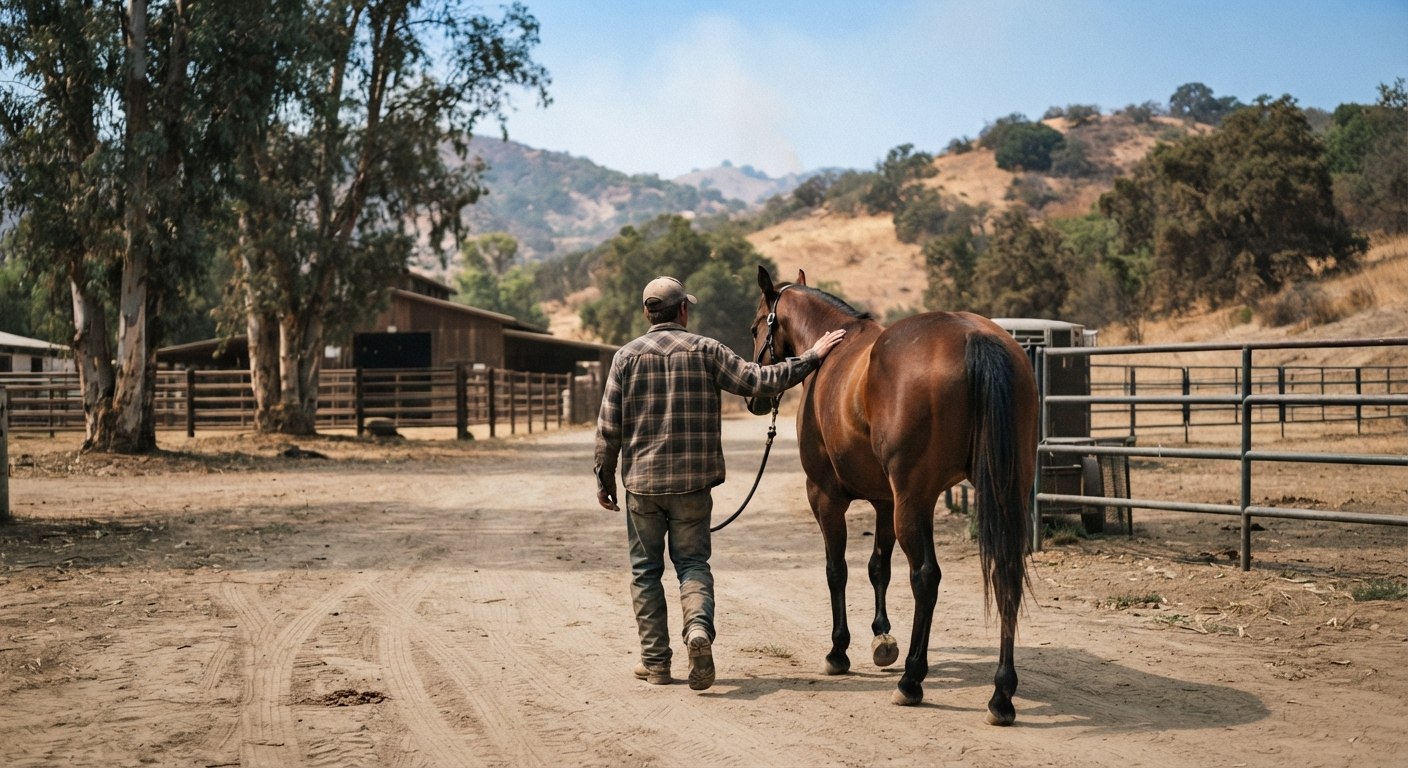
Los Angeles County's own emergency preparedness materials are direct about this: even when people are cleared to return, "the area may not be safe for your pets." Animals returning after a fire can face injury, exposure to hazardous substances or residues, escape through damaged fencing, loss of shelter and shade, and disrupted water, power, or other services. One more thing worth sitting with, straight from the county's own guidance: animals returning to a changed landscape will likely be "upset, disoriented, and easily stressed," even when the property is technically secure.
That's the entire premise of this guide. A road may be open and a house may still be standing, while the property still has unsafe fencing, unreliable water, damaged shelter, or hazardous debris — conditions a general re-entry authorization does not necessarily evaluate for a horse property specifically. This guide is built around one decision: officials have cleared re-entry, and now you need to decide whether to actually unload the trailer. It doesn't cover evacuation itself — see our Wildfire Evacuation and Preparedness guide for that — and it doesn't cover ongoing smoke exposure or return-to-work timelines in depth, which deserve their own dedicated piece.
Don't Unload Yet, If Any of These Are True
Before anything else, confirm that official re-entry and current road-access instructions actually allow you to reach the property — that's the baseline, not optional. Then run through the rest as a fast, practical safety check, not an exhaustive inspection. If any core item is unresolved, keep your horse at its backup destination a little longer.
- You haven't confirmed the access route is usable with your actual truck and trailer, not just a passenger car
- Fencing, gates, or latches show fire or heat damage you haven't repaired and tested
- You cannot confirm a dependable, safe water supply — including whether any Do Not Drink or Do Not Boil notice is active in your area
- Debris, downed lines, unstable trees, or other hazards remain on the property
- The barn, run-in, or shelter has damage you haven't assessed
- You haven't prepared a secure temporary holding area with safe containment, water, and shade
- You don't have a realistic fallback plan if the property turns out not to be ready after all
Confirm the Route Before You Tow
Don't assume that because an area has reopened, your specific route in is genuinely usable with a loaded trailer. If conditions and official access rules allow, inspect the route before towing your horse in — ideally using the actual truck-and-trailer combination you'd use, not just a passenger vehicle. Canyon roads, narrow bridges, and tight turns that are fine in a car can be genuinely difficult, or impossible to turn around on, with a trailer behind you. Watch for downed power lines, damaged guardrails, fire-weakened trees, and debris.
Electrical Hazards and Downed Lines
Before relying on a barn, tack room, water pump, or automatic waterer, check for damaged electrical equipment, exposed wiring, or downed lines. Stay at least 100 feet from a downed power line — or from anything touching it — and call 911. Don't approach or move it yourself. Don't assume utilities are safe or fully restored simply because the neighborhood has reopened — outages can be extended and intermittent well after an area is cleared for re-entry.
Ash and Debris: Protect Yourself Before You Inspect
Before walking fence lines, turnout areas, barns, or feed storage, protect yourself first — you can't properly assess whether the property is horse-ready if you're not safely able to inspect it. Avoid dry sweeping or anything else that puts ash back into the air, and wear gloves, eye protection, and a properly fitted N95 respirator or better when conditions call for it — debris from burned structures can contain hazardous materials. The same logic extends to the horse itself: don't let it graze, roll, or investigate any area you haven't personally inspected for obvious hazards, or that remains subject to official restrictions or professional cleanup.
Inspect Containment Before the Horse Arrives
This is likely the most valuable physical check on the property — fire-damaged fencing letting an animal escape is one of the specific risks named above. Fire and heat can damage fencing and other containment, sometimes in ways that aren't obvious at a glance. Walk the entire perimeter, not just the section nearest the gate:
- Check every post, rail, and section of fencing for heat damage or structural weakness
- Confirm gates actually latch securely — a gate that looks closed isn't the same as one that's tested and secure
- Look for nails, wire, glass, or metal debris in turnout areas and along fence lines
- Prepare one verified, secure holding area — with safe fencing, shade, and clean water — before opening a horse into a larger space you haven't fully inspected. You don't necessarily need the entire property restored before bringing a horse home; you do need at least one safe, secure, adequately supplied area, even if the rest of the property isn't there yet
A horse may react differently to a visibly altered, ash-covered, or disrupted environment, even when containment appears sound — animals returning to a changed landscape tend to be more easily stressed. Allow time for calm handling, and don't assume the property will feel familiar to the horse just because it's the same physical space.
Water: Available Isn't the Same as Safe
Don't rely on a trough simply because it still holds water. Check whether your well, pump, pressure tank, or automatic waterer can continue functioning reliably once the horse is back on the property — and check for an active Do Not Drink or Do Not Boil notice in your specific area first. These notices apply to more than human use — "this also applies to pets and domestic animals" — and if one's active, boiling, filtering, or otherwise treating the water yourself won't make it safe. Some post-fire water contamination involves chemicals that home treatment simply can't remove. If you cannot confirm a dependable, safe water supply, keep the horse at its backup destination a little longer if you can. Bringing containers of safe water can bridge a short inspection visit, but it isn't a substitute for an actual working, verified water plan before the horse moves back in.
Check Feed, Hay, and Bedding Before Trusting It
Inspect hay, feed, and bedding for ash, water damage, mold, pests, damaged packaging, or any condition that makes the product questionable — don't assume supplies are usable simply because they're still sitting where you left them. Don't make a blanket call based on ash alone, either way: research on wildfire ash and rangeland forage suggests ash exposure doesn't automatically make all forage unsafe, but that's not the same as declaring every ash-exposed bale or feed bag fine for a horse — proximity to burned structures, water damage, mold, and other contaminants can change the picture entirely. If you have real doubts about exposed forage, keep replacement supplies available and check with your veterinarian, an equine nutritionist, your feed supplier, or another qualified equine-feed professional before relying on it.
Shelter and Shade
If trees, a run-in shed, or part of a roof structure were lost, your horse may be returning to meaningfully less shade and shelter than before — a real concern in Southern California heat, and one of the specific post-disaster risks named above. Have a realistic plan for shade, and for how you'll check on the horse safely after dark if power isn't yet restored.
A Note on Smoke and Air Quality
If smoke is still visible or air quality remains poor, that's a separate decision from whether the property is physically ready, and it deserves more careful treatment than a single checklist item — we'll cover smoke exposure, recovery timelines, and safe return to exercise in a dedicated follow-up. For now: limit exercise and monitor local air-quality conditions directly, rather than assuming that clear-looking skies mean the air is actually safe — horses can continue to be affected by particulate exposure after visible smoke has cleared. Contact a veterinarian promptly if your horse has persistent coughing, nasal discharge, wheezing, visibly increased effort to breathe, or reduced appetite.
This is general preparedness information, not a substitute for official guidance or your veterinarian's judgment. Conditions vary significantly by property and by fire — always confirm current road, water, and utility status directly with your local water utility and LA County's official channels before acting.